What would happen if we just let life flow and not analyzed it too much? Maybe wisdom and love would be reliably and equally real to us.Wisdom tells me I am nothing.
Love tells me I am everything.
And between the two my life flows.
Wednesday, July 12, 2006
Wisdom and love
This is quite beautiful:


Tuesday, July 11, 2006
Illumination

Simone Weil
Patience is of utmost importance in the meditative disciplines. Here's why:
Even if our efforts of attention seem for years to be producing no result, one day a light that is in exact proportion to them will flood the soul.
-- Simone Weil
Understanding pain
It's amazing how we manage to increase our suffering by fighting against pain. This point is made by Joel and Michelle Levey in The Fine Arts of Relaxation, Concentration, and Meditation:
To sum up: resisting the pain makes it worse. Accepting the pain makes it better. It's as simple as that.
[T]he greatest suffering does not come from the torn or rotting flesh, or the tumor or the bedsores, but from their mental interpretation and response to the situation. Fear, helplessness, frustration, anger, guilt, and blame are clearly effective methods of intensifying the pain, constricting the body and mind to isolate, contract, and cut off that part of oneself from healing. Those who learn to open to pain, to investigate it and allow it to change, flow, and float freely in their bodies, take the first step toward mastering pain. Though this openness does not mean that the pain will go away, it does create a mental and emotional space in which pain is no longer related to as the enemy or as an emergency. With this openness we are able to accept, nurture, and love the part of us that is in pain. If we then bring the same quality of openness and reflection to our thoughts and emotional feelings, we will learn to recognize both the patterns of mind that intensify our suffering and the patterns of mind that bring greater harmony. In this way we become more responsible for optimizing our own self-healing potentials.
To sum up: resisting the pain makes it worse. Accepting the pain makes it better. It's as simple as that.
Monday, July 10, 2006
The importance of generosity
Over on Child of Illusion, I blogged a quote today by Tony Campolo about how selfish we are as Americans. It seemed apt, therefore, to say something about the practice of generosity here on the meditation blog:
What would happen if we made giving more important that getting in our lives? Wouldn't we be much more free in our spirits?
The practice of generosity can serve as a corrective to addictive consumerism. Generosity enacts the quality of nongreed; it is a willingness to share, to let go. It may be giving of time, energy, resources, love, and even in rare cases, one's own life for the benefit and welfare of others. Generosity weakens the tendency of attachment and grasping and is intimately connected with the feeling of lovingkindness. People who experience the power and joy of generosity will also experience its effect on consuming. The cultivation of generosity offers a very strong antidote to the wanting mind and would be a powerful corrective if taken up in a widespread way across our culture.
To cultivate generosity directly is another fundamental part of living a spiritual life. Like the training precepts and like our inner meditations, generosity can actually be practiced. With practice, its spirit forms our actions, and our hearts will grow stronger and lighter. It can lead to new levels of letting go and great happiness.
What would happen if we made giving more important that getting in our lives? Wouldn't we be much more free in our spirits?
The wounded healer
Yesterday I quoted a passage by Joel and Michelle Levey that talked about how experiencing pain can help us cultivate compassion for others if we work with it skillfully. Henri Nouwen has written quite a bit about the concept of the "wounded healer" - someone who is able to help others because of the suffering he or she has gone through. Linda Cole sent me a passage today by Nouwen that speaks to this:
This passage speaks to the importance of self care. We need to spend time with someone who is skilled in listening and helping - who can assist us in binding up our own wounds - before we try to help others.Listening With Our Wounds
To enter into solidarity with a suffering person does not mean that we have to talk with that person about our own suffering. Speaking about our own pain is seldom helpful for someone who is in pain. A wounded healer is someone who can listen to a person in pain without having to speak about his or her own wounds. When we have lived through a painful depression, we can listen with great attentiveness and love to a depressed friend without mentioning our experience. Mostly it is better not to direct a suffering person's attention to ourselves. We have to trust that our own bandaged wounds will allow us to listen to others with our whole beings. That is healing.
Sunday, July 09, 2006
Working skillfully with pain
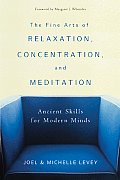
Yesterday I brought you a passage from The Fine Arts of Relaxation, Concentration and Meditation by Joel and Michelle Levey on the subject of pain. I want to share another paragraph from the same chapter today:
Traditionally, different meditation techniques have been used effectively to cope with or master pain. Though concentrative techniques can be effective at masking the pain, the emphasis of applying meditation to working with pain is that of directly investigating and understanding it. Upon careful examination of the field of sensations that we label "pain," we find that it is not a thing or unchanging entity. Rather pain is a nonentity, a dynamic field of sensations and feelings that changes with each moment and with each state of mind. The courage to face and understand our own suffering is the first step to working effectively with our own pain. It is also the first step in learning to open our hearts and minds enabling us to empathize and compassionately relate to the sufferings of others. By understanding our own wish to be free from our suffering, we begin to develop greater compassion, wishing that others might be free as well.
Although the above process is easier to practice with physical pain, it is also very effective with mental or emotional pain. Simply being a meditator does not mean we will not feel pain when something terrible happens. But as meditators we have skills for relating with our pain in a way that will reduce our suffering and bring us insight.
Saturday, July 08, 2006
About pain
Today I happened to pick up a book that's been on my shelves for a long time really called The Fine Arts of Relaxation, Concentration, and Meditation by Joel and Michelle Levey. I don't know if I've blogged from it before but I don't think so. I opened it a random and came across this beginning of a chapter called, "Transforming Pain":
The Dalai Lama often reminds his students that the goal of the path of meditation is to fully awaken to our true nature and to become enlightened. To become enlightened, he has pointed out, we must perfect compassion, and to perfect compassion, we must encounter suffering. Taking this teaching to heart, a natural next reflection is that if this is really true, then what is the real meaning of pain or suffering in our lives and in our world?I do think that the purpose of life is to cultivate compassion and to offer it both to ourselves and to others. In the next few days we'll look at more of what the Leveys have to say about working skillfully with pain.
Pain, suffering, loss, and dissatisfaction invite us onto a path of soul searching, self-refection, and transformation. If instead of turning away or dulling our experience, we embrace and investigate it and allow it to open our hearts and minds to a deeper compassion and insight, there is great liberating potential in this.
Friday, July 07, 2006

The boundless sky
Here's a rather marvelous meditation I found in 1,001 Meditations by Mike George:
Anything that can help us cultivate an experience of spaciousness is all to the good. I would also recommend trying this as a visualization when a view of the sky is not accessible for you. After you've practiced this with the actual sky a few times, it will be quite possible to see the sky in your mind's eye and do the meditation that way.
Sit where you have an unrestricted view of the sky - outside if weather permits. Gaze at it with softly focused eyes. (Do not look directly at the sun, or you may do serious harm to your eyes.) Imagine that all thoughts, sensations, habits, doubts and worries are dissolving into the vast openness. Whenever a thought arises, or there is tension in your body, imagine that with each breath more and more space gathers around the tension, until it disappears into the boundless sky.
Anything that can help us cultivate an experience of spaciousness is all to the good. I would also recommend trying this as a visualization when a view of the sky is not accessible for you. After you've practiced this with the actual sky a few times, it will be quite possible to see the sky in your mind's eye and do the meditation that way.
Thursday, July 06, 2006

We all need to remember this:
Seven blunders of the world that lead to violence: wealth without work, pleasure without conscience, knowledge without character, commerce without morality, science without humanity, worship without sacrifice, politics without principle.
--Mahatma Gandhi (1869-1948)
Wednesday, July 05, 2006
The power of aspiration
Today I stumbled upon a quotation I saved to my computer a long time ago. It's by the same person who wrote that wonderful book, The Little Prince. Here it is:
The longing for the immensity of the sea is our aspiration for wisdom and inner liberation. The tasks of building the ship are the the exercises, the practices, of mindtraining and meditation. If we genuinely "long for the endless immensity of the sea" we will not mind the discipline involved in actually training our mind.If you want to build a ship, don't drum up people together to collect wood and don't assign them tasks and work, but rather teach them to long for the endless immensity of the sea.
Tuesday, July 04, 2006
 Let us remember today the radical ideas of the Founding Fathers and practice gratitude for their courage. The following quotation really seems to fit today:
~ Ching Ning ChuAcquire the courage to believe in yourself. Many of the things that you have been taught were at one time the radical ideas of individuals who had the courage to believe what their own hearts and minds told them was true, rather than accept the common beliefs of their day.
Happy Independence Day!
Monday, July 03, 2006
Oh, I like this!
This is from a book called Idea Power:
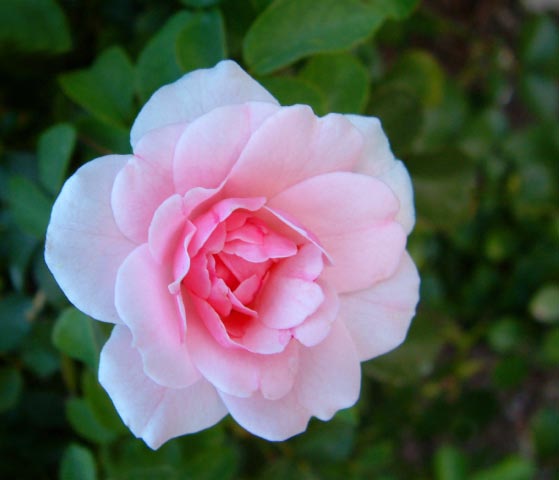
Throwing away ideas too soon is like opening a package of flower seeds and then throwing them away because they're not pretty.
A practice of love
The practice of meditation -- mindfulness -- is for me a practice of love. Unconscious love is an oxymoron, an impossibility. To be fully present with oneself and others, I believe, is the truest love there is. Our courage to enter the darkest recesses of our hearts and minds births a deliverance from all that has kept us tight, disconnected and loveless for so long. We forget and we remember.
Sunday, July 02, 2006
Expect Nothing
Here's a truly wonderful poem by Alice Walker:
Expect nothing. Live frugally
On surprise.
Become a stranger
To need of pity
Or, if compassion be freely
Given out
Take only enough.
Stop short of urge to plead
Then purge away the need.
Wish for nothing larger
Than your own small heart
Or greater than a star;
Tame wild disappointment
With caress unmoved and cold.
Make of it a parka
For your soul.
Discover the reason why
So tiny human midget
Exists at all
So scared unwise.
But expect nothing. Live frugally
On surprise.
Saturday, July 01, 2006
Love transforms
Love transforms you from death into life: it quickens you to be able to see where you cannot see and feel where you cannot feel.
Subscribe to:
Posts (Atom)
