Saturday, November 25, 2006

Meditation timer


Do you have a problem with timing your meditation? I've got just the website for you! The site is called Audio Dharma and it serves as the archives of the dharma (teaching) talks given by a teacher named Gil Fronsdal as well as several guest speakers at the Insight Meditation Center in Redwood City, California.

The page with the bells offers meditation times between 15 minutes and one hour. You can also use the screen as a visual support if you wish as a constantly moving but very soothing visual is offered along with the sound of the gong.

You can also download the files of the bells and save them to your own computer.

Friday, November 24, 2006

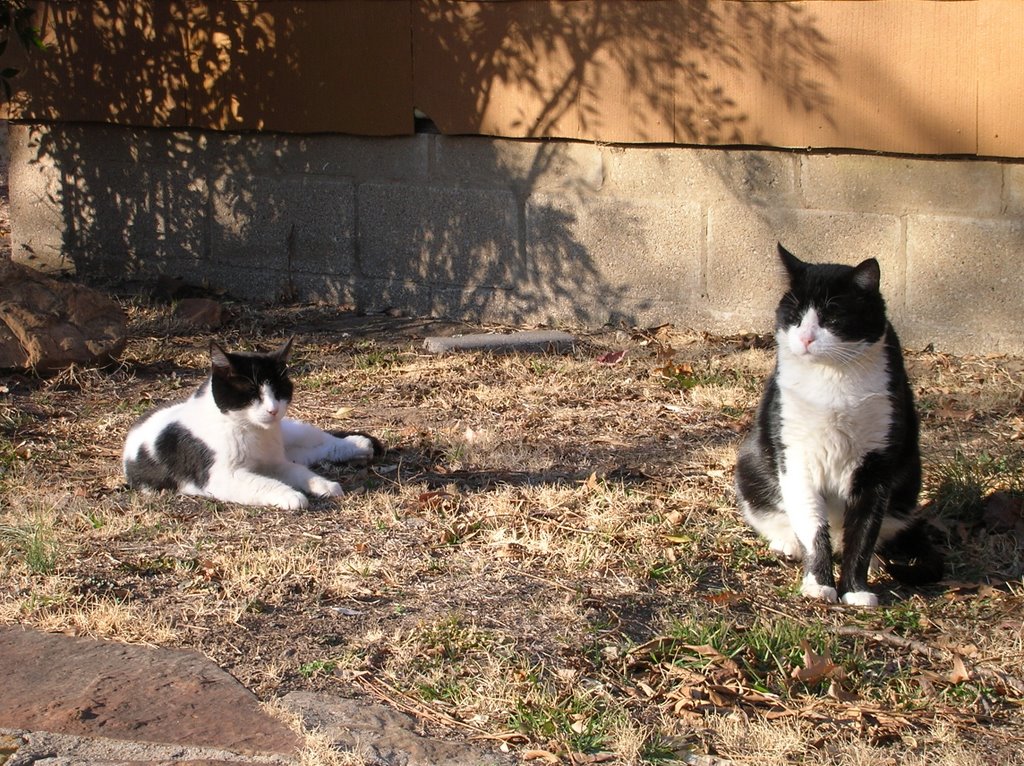
Friday cat blogging!

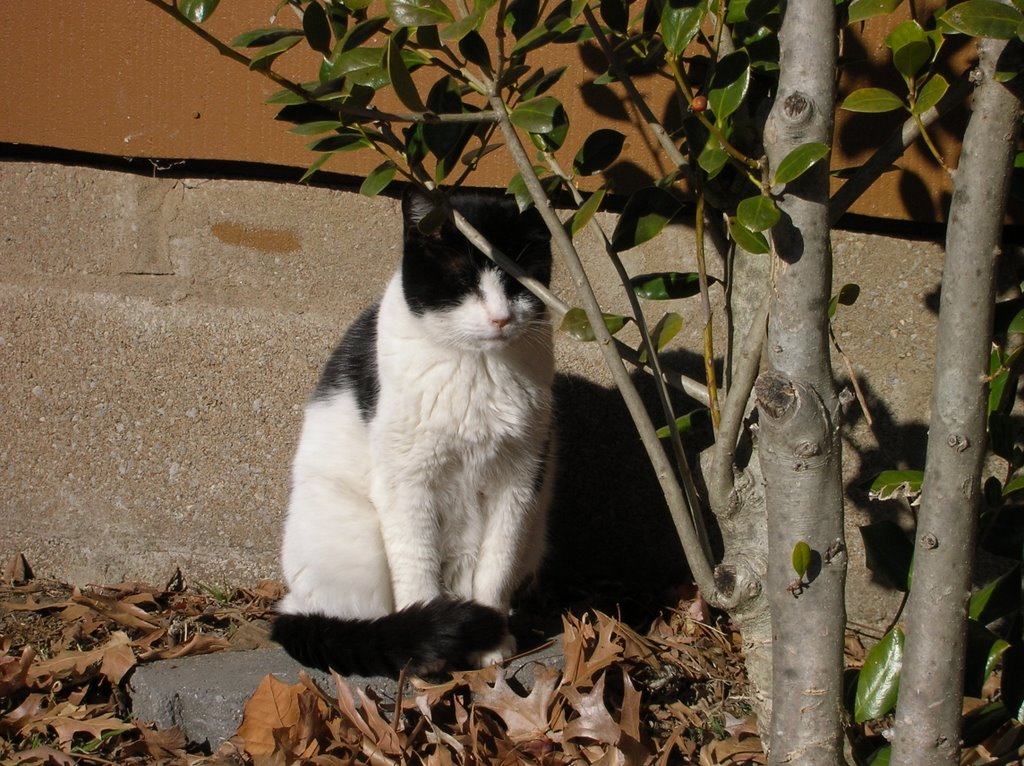
Henry

Smiling for peace

Thich Nhat Hanh

In Thich Nhat Hanh's tradition, part of meditation posture is assuming the half-smile. Even though that is not taught in the Tibetan system in which I'm trained, I try to do it from time to time. It's amazing how it shifts one's attitude:

Smiling is very important. If we are not able to smile, then the world will not have peace. It is not by going out for a demonstration against nuclear missiles that we can bring about peace. It is with our capacity of smiling, breathing, and being peace that we can make peace.

--Thich Nhat Hanh

I don't think he's suggesting that we not take action. Thich Nhat Hanh is a person of action himself. But he's saying it needs to start with oneself. We need to be the change we wish to see.

Thursday, November 23, 2006

Cultivating gratitude

On this Thanksgiving Day it is appropriate to focus on the mind state of gratitude and how to cultivate it. I want to call your attention to an essay entitled To Give Is to Receive by Roger Walsh. Here's an excerpt:
Like other attitudes, gratitude can be cultivated. We don't have to wait for our fairy grandmother to shower us with gifts before feeling thankful. We can develop gratitude by reflecting on the gifts that are already ours. This reflection can be done for a minute, a day, or throughout a lifetime. Most people celebrate their birthday and holidays, but those who cultivate gratitude celebrate every day. We can be grateful because we are happy, but we can also be happy because we are grateful.

We tend to forget how very different the laws that govern the mind are from the laws that operate in the physical world. In the world, if we give a physical thing to another person, whether it be a toy or a diamond, we lose it. Yet in the mind, the opposite is true. Whatever we intend for another person we experience ourselves
, whatever we give we gain, whatever we offer flowers in our own mind.
I consider myself to be a truly happy person but, like anybody else, I can get frazzled and grumpy if I've got too much going on or if I'm experiencing events as frustrating. When that happens, all I have to do is remember gratitude - my own gratitude which is ongoing - and my feeling of deep happiness returns. Truly, there is no more powerful a practice for supporting our experience of profound well being.

Wednesday, November 22, 2006

Wednesday life form blogging


Photo by Cynthia Burgess

Two on gratitude

Thanksgiving Day is tomorrow and so it is a good time to be focusing our awareness on gratitude. Here are two quotations worth pondering, I think:

Sanctity has to do with gratitude. To be a saint is to be fueled by gratitude, nothing more and nothing less.

— Ronald Rolheiser in The Holy Longing

Look closely and you will find that people are happy because they are grateful. The opposite of gratefulness is just taking everything for granted.

— David Steindl-Rast in The Music of Silence

As meditators, we do well to be grateful for our practice and for the circumstances that led us to ask for instruction in the first place. If we cultivate gratitude for meditation, we will practice more easily and we will definitely enjoy it more.

Tuesday, November 21, 2006

Blogger troubles again

Hello, everyone.

I apologize for the lack of postings. Blogger has been down for the last 36 hours or so, I'm afraid, so I haven't been able to post.

I'll get caught up as soon as possible.

Bye for now.

Monday, November 20, 2006

Seeking happiness

This morning, Cynthia gave me a copy of an article called Mastering Your Own Mind by Katherine Ellison that's published by Psychology Today. It's about the benefits of meditation. Here's one observation that I've told you about before:
One recent study at Massachusetts General Hospital found that 40 minutes of daily meditation appears to thicken parts of the cerebral cortex involved in attention and sensory processing.
And here's an excerpt toward the end of the article:
Meditators find that when they stop taking their own emotional upheavals so seriously, the self drops away. They process the world more directly. Absorption, a state similar to what is known as "flow" increases. "People are hungry for this kind of authentic experience," observes [Jon] Kabat-Zinn.

Urging seekers of happiness to not only shake off egoism but to understand the amorphous nature of the ego itself remains an subversive idea in the West, even though some leading neuroscientists have come to the same conclusion. Wolf Singer, director of the Max Planck Institute in Frankfurt, Germany, for instance, describes the brain as lacking any decision-making "coherence center." It's like an orchestra without a conductor.

It's a tremendously hopeful possibility that brains can change for the better - specifically, become sharper, nicer, happier.
Remember, the universal motivation is the wish to be happy. It's what we all want. What Western researchers are now discovering is that we can, indeed, experience true happiness through meditative practice.

Sunday, November 19, 2006

Mindfulness and psychotherapy

I came across a blog today called "Health Psych: Current issues in clinical health psychology". I was particularly interested in a posting entitled simply "Mindfulness". Here's part of it:
There's increasing interest in the so-called "third wave" of development of cognitive-behavioural therapy. Just as behavioural therapy was expanded by the inclusion of cognitive approaches, there is a further movement towards the incorporation of mindfulness and other more spiritually-based approaches into cognitive-behavioural therapy.

Based on a combination of Eastern meditation and Western psychology, mindfulness based cognitive-behavioral therapy techniques are used in the context of both physical and psychological health problems.

Mindfulness involves developing the ability to pay deliberate attention to the experience of life from moment to moment. Using relaxation, an awareness of the breath and a gentle focus of attention, individuals learn to observe their thoughts, emotions and bodily sensations in a non-judgemental way.
The shrinks are discovering what meditation teachers have known for a long time and that is that experiencing emotions without judgment actually helps with emotional regulation. I'll tell you again, folks, what I've told you so many times before: This stuff really works!

Saturday, November 18, 2006


It is important to recognize the power of our emotions--and to take responsibility for them by creating a light and positive atmosphere around ourselves. This attitude of joy that we create helps alleviate states of hopelessness, loneliness, and despair. Our relationships with others thus naturally improve, and little by little the whole of society becomes more positive and balanced.

- Tarthang Tulku

Friday, November 17, 2006

Ethel - in memoriam


Ethel Finlay (? - November 15, 2006)

I am so grateful for the words of sympathy sent to me by so many about both Edgar and Ethel. I thank you from my heart.

Medicine

The Dalai Lama said the following:
Spirituality is like a medicine. To heal the illness, it is not sufficient to look at the medicine and talk about it: You have to ingest it.
Our illness is the attachments that cause our suffering and the mind poisons that overtake us. The medicine is meditating regularly, coming to class, and applying the meditative principles in our everyday life. Let's all ingest that wonderful medicine!

Thursday, November 16, 2006

Our natural state

I went through a period of my life in which I immersed myself in the writings of Anthony de Mello - to my very great benefit! This is from a transcript of a talk he gave. Click through if you want to be really challenged. For now let's look at something he said about happiness:
Happiness is our natural state. Happiness is the natural state of little children, to whom the kingdom belongs until they have been polluted and contaminated by the stupidity of society and culture. To acquire happiness you don't have to do anything, because happiness cannot be acquired. Does anybody know why? Because we have it already. How can you acquire what you already have? Then why don't you experience it? Because you've got to drop something. You've got to drop illusions. You don't have to add anything in order to be happy; you've got to drop something. Life is easy, life is delightful. It's only hard on your illusions, your ambitions, your greed, your cravings.
Some years ago I listened to a series of tapes by Richard Rohr called "Letting Go: A Spirituality of Subtraction" that made essentially the same point as de Mello. That inner change - the one from striving for addition to embracing subtraction - is one of the most important ones we'll ever make. Let go, let go, let go. This is truly the way to peace and well being. And there's no other way. Of that I am convinced.

This time it's Ethel

Ethel Finlay (? - November 15, 2006)

It is with great sadness that I tell you that Ethel was hit by a car last night and died almost instantly.

She had been depressed with the loss of Edgar and was not eating. I can only surmise that she was not at her best and therefore momentarily lost her usual street smarts.

I'm still in a state of shock. It's hard to believe that I lost them both in the span of six days.

But I'm glad they are together now. Somehow I can't imagine Ethel being happy without Edgar. Now she has joined him.

Even though she would rarely let me touch her, I loved her very much.

Good-bye, dear Ethel. May you rest in peace.

Wednesday, November 15, 2006

Encouragement

This week in the ongoing classes we discussed the importance of enthusiasm with regard to our meditative practice. We looked at three approaches to enthusiasm: the enthusiasm we practice for our own sake, the enthusiasm we practice with regard to others, and the enthusiasm in others from which we benefit. Practicing enthusiasm is one of the most effective ways we can offer support and encouragement. Today I want to offer a quotation specifically about encouragement:

There are people whose presence is encouraging. One of the most beautiful gifts in the world is the gift of encouragement. When someone encourages you, that person helps you over a threshold you might otherwise never have crossed on your own.

— John O'Donohue in Eternal Echoes

John O'Donohue is an Irish philosopher and spiritual teacher who also wrote a wonderful book called Anam Cara (that's Gaelic for "soul friend"). Any of O'Donohue's writings or tapes are well worth your attention.

Tuesday, November 14, 2006

Tuesday meditative picture blogging

Photo by Weaver Bloomfield

Our task

Your task is not to seek for love, but merely to seek and find all the barriers within yourself that you have built against it.

-- Jalaluddin Rumi

Monday, November 13, 2006

Monday meditative picture blogging

Photo by Bill Miller

Trying to fix the ego

One of my big challenges is to persuade people to let go of the effort to fix themselves. Here's a wonderful quote from Fingers Pointing Toward the Moon by Wei Wu Wei that speaks to this:
There seem to two kinds of searchers: those who seek to make their ego something other than it is, i.e. holy, happy, unselfish (as though you could make a fish unfish), and those who understand that all such attempts are just gesticulation and play-acting, that there is only one thing that can be done, which is to disidentify themselves with the ego, by realising its unreality, and by becoming aware of their eternal identity with pure being.
The kind of spirituality that liberates is one of subtraction - not addition. It's one of letting go, not adding on.

Sunday, November 12, 2006

Shrine for Edgar


Well, I've started a little shrine for Edgar. The little stone sleeping cat was given to me just yesterday as a memorial for such a fine, fine kitty. I will be adding some flowers and a photograph soon.

Know thyself

As I mentioned over on Child of Illusion, I came across a very interesting blog yesterday called Markham's Behavioral Health. The postings offer a mixture of mental health, public health, social work, education, politics and spirituality topics. Here's something the blog owner had to say about knowing oneself:
We all have our light side and our shadow side. It is best if we become aware of and manage constructively both our talents and abilities and virtues as well as our weaknesses, our deficits, and our sins. It is the witness in us that gives us the ability to observe ourselves: our physical bodies, our personalities, our values, our spirits so that we can attain wisdom. Socrates said that an unexamined life is not worth living. Are we living examined lives?

Knowing ourselves we can use different parts of ourselves at different times depending on our purposes and our goals. The idea is not repress and deny parts of ourselves, or to exalt and brag in an egotistical way about parts of ourselves, but to keep all the parts of ourselves in balance. It is in our self knowledge that we are enabled to do this.
I recommend that you go over and take a look. I particularly enjoyed browsing in the archives.

Saturday, November 11, 2006

Saturday meditative picture blogging

Photo by C. Robin Janning

Do visit Robin's blog, Gramercy Digital Diary. Her work is amazing. And you can always reach it from Meditation Matters because it's on my blog roll.

True prayer

Found on the Gratefulness.org site:

Prayer begins at the edge of emptiness.

-- Rabbi Abraham Joshua Heschel

Friday, November 10, 2006

Rest in peace

Edgar Finlay (? - November 9, 2006)

Ethel and Edgar

Dear friends, it is my sad duty to tell you that Edgar had to be put down last night. The circumstances are too complicated and painful for me to go into right now but be aware that he was FIV positive (feline AIDS) and that that was part of it.

He had a very beautiful death. He purred right up to the end when he died with his old head on the arm I was cradling him with. Needless to say, I am heartbroken.

Ethel will miss her life partner. Now she is all alone. Unlike Edgar, who was a real love muffin, Ethel is still quite wild and will rarely let me touch her - and then only for a second or two. I have tried to invite her in but she won't come. Perhaps when it gets cold and Edgar is not there for her to snuggle with, I will be able to coax her inside. We shall see.

I'm having Edgar cremated. Perhaps I will bury his ashes in the yard where he was so happy. Perhaps I'll come up with another plan. I'm not sure yet.

Do remember me in my grief and say a prayer or spare a thought for Edgar as he makes the great transition.

He was a good, good kitty.

Thursday, November 09, 2006

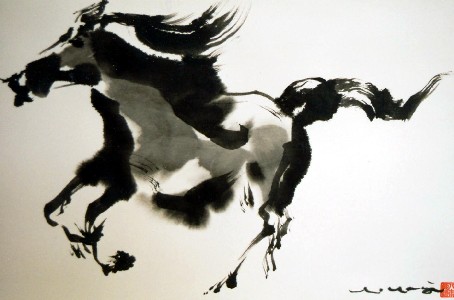
A runaway horse


I found this on the Daily Zen website:

The working of the mind seems similar to being on a runaway horse at times. Restlessly moving from one emotion, idea, or construct to another. Meditation is like reining the horse in, drawing the awareness back inside. And with practice the Return happens more and more gracefully.

-- Elana, Monkess for Daily Zen

So true.

Wednesday, November 08, 2006

Wednesday life form blogging

Lady
She guards llamas at the Reynolds farm.

Experiencing unity

Here's an excerpt from a book by Clarice Bryan called Driving to Nirvana:
The first time it happened, I was driving on a two-lane highway near the Trinity Alps in a well-wooded area of Northern California. It was a rolling, gently curving road, and there was no other traffic in either direction. All at once, I became the car. I could feel my tires rotating on the pavement and a divine sense of union with the road. There was no conscious effort to turn the wheel or press on the accelerator, because I was the road as well as the car. I was the harmony of the car and the road. I was the melody of the universe. I was bursting with joy and a feeling of oneness. My body was totally aware of everything around me; the eucalyptus trees along the roadside, the manzanita bushes, with their dusty green leaves, the tiny cloud overhead, the clicketyclack of the tires, the purr of the engine, the smell of fresh air. My body was all these and so much more. My whole body smiled in this union as we floated along together through the forest and out into the sunshine. Words are totally inadequate to describe the unbelievable happiness I felt.
This is truly what it means to be in the moment. We can give ourselves permission to experience this unity any time, any place. Because it's always, always true. It's always, always the way things are!

Tuesday, November 07, 2006

Setting a good example


People will always follow a good example; be the one to set a good example, then it won't be long before the others follow... How lovely to think that no one need wait a moment, we can start now, start slowly changing the world! How lovely that everyone, great and small, can make their contribution toward introducing justice straightaway... And you can always, always give something, even if it is only kindness!

-- Anne Frank

Monday, November 06, 2006

Monday meditative picture blogging

Photo by Cynthia Burgess

Are you attached to security?

It's natural to want security, of course. But can we ever really have it? Is it all it's cracked up to be anyway? I want to share with you some observations about security and insecurity that I found on a wonderful blog called "Meditation Photography".* Here's an excerpt:
What exactly is insecurity? It means tomorrow is not going to repeat today. It means tomorrow you may not even be alive. It means that one has to live each moment as if it is the last moment. A life of security will be simply boring. It will be like seeing the same movie again and again and again — knowing every detail of what is going to happen. You can enjoy a movie only once. If you are an idiot, then it is another matter….

Insecurity is the very fabric of life. If you don’t understand insecurity, you can never understand life. Seasons will change; climates will change; the fall will come, the spring will come. Everything will go on changing, nothing can be taken for granted; this is insecurity. You want everything to be certain, permanent. But have you ever thought what will be the outcome of it if everything is permanent? You eat the same food every day, you say the same things every day, you listen to the same things every day. And there is no death even to demolish this tragic living — you are living in a nightmare.

Insecurity keeps people fresh, alive, adventurous — knowing that things can be changed. Even without their changing them, they are going to be changed. So there is great scope for change, for transformation.
Of course, I normally make the same point about impermanence. I like this person's observation that the desire for security is really a desire for permanence and that if things are permanent, no change is possible. So impermanence - and, by extension, insecurity - is actually our friend.

* I do recommend that you take a look at the Meditation Photography blog from time to time. The pictures are absolutely stunning.

Sunday, November 05, 2006

The most important thing

Etty Hillesum

Sometimes the most important thing in a whole day is the rest we take between two deep breaths, or the turning inwards in prayer for five short minutes.

-- Etty Hillesum

Saturday, November 04, 2006

Saturday flower blogging

Photo by Cynthia Burgess

What happens when you meditate?

Many people wonder just how it is that meditation has the effect it does. Today I came across a little article entitled "Meditation – An Amazing Stress Reduction Technique That is Easy to Do". Here's an excerpt that explains how meditation works to reduce stress:
One of the pioneers of serious meditation research was Harvard's Dr. Herbert Benson, whose 1968 book The Relaxation Response showed that meditation had a measurable affect on stress, slowing breathing and heartbeat and lessening the body's natural fight-or-flight response. Meditation will allow you to relax your body and focus your thoughts, thus focusing your mind and allowing you to let go of the day's troubles. It allows your body to refresh its resources, which is good for your immune system, your blood pressure and your mental outlook.

When you meditate, your heart rate and breathing slow down, your blood pressure normalizes, and you use oxygen more efficiently. Your adrenal glands produce less cortisol, adrenaline and noradrenaline and you produce good, healing. Your mind clears, allowing you harper thought and greater creativity. Meditation has proved beneficial for people trying to give up smoking, drinking and drugs.
Everything that helps motivate us is all to the good. And I do recommend Benson's The Relaxation Response, by the way. It's now a classic.

Friday, November 03, 2006

Friday cat blogging!

Henry
Photo by Ellie Finlay

Peace and happiness

One of my favorite books by the prolific Thich Nhat Hanh is entitled Peace Is Every Step. Here's a passage from the introduction:

Peace is present right here and now, in ourselves and in everything we do and see. The question is whether or not we are in touch with it. We don't have to travel far away to enjoy the blue sky. We don't have to leave our city or even our neighborhood to enjoy the eyes of a beautiful child. Even the air we breathe can be a source of joy.

We can smile, breathe, walk, and eat our meals in a way that allows us to be in touch with the abundance of happiness that is available. We are very good at preparing to live, but not very good at living. We know how to sacrifice ten years for a diploma, and we are willing to work very hard to get a job, a car, a house, and so on. But we have difficulty remembering that we are alive in the present moment, the only moment there is for us to be alive. Every breath we take, every step we make, can be filled with peace, joy, and serenity. We need only to be awake, alive in the present moment.

Suppose circumstances are not to your liking. Does that mean you have to be unhappy? Not if you take Thich Nhat Hanh's advice. Things can be very bad indeed and we can still focus on the moment and know real happiness and inner peace.

Thursday, November 02, 2006

Meditation CD

Here's some information I found that might be of interest to you:

The website www.cdbaby.com offers a meditation bell CD. This CD is supposedly going to take the place of the clock, and yet can offer you so much more than time. If you wish to meditate, relax, or simply rest, for a few minutes to an hour, this CD will be perfect for you. You will be made to know that it is the end of your meditation or relaxation time by the calming tones of a 17th century Himalayan meditation bell. This CD is a tool for a guided meditation itself. Playing it from the start will take you to the meditation process where the mind is free from any thought into a state of deep serenity.

The meditation bells will sound every fifteen minutes which serves as your signal to take stretch or change positions. You don’t have to look at the clock and time yourself. The meditation bells will make three closing sounds to mean the end of the meditation session. This meditation bells CD is not only restricted to work for those who are doing meditation practices. This is also perfect for those who are doing yoga, or any kind of exercises. Aside from working as your clock or timer, the meditation bells will put you in the right mood.

The featured meditation bell sounds in this CD were also used in the past to guide the Tibetan monks during their meditation sessions. For a wide array of sounds of the different Tibetan meditation bells, one may visit
www.himalayanbowls.com and sample the unique tones online.


Of course we have our simple little homemade CD at the Center. One track has a bell every 5 minutes and the other track has a bell every 10 minutes. Let us know if you would like one and we'll get it to you for whatever donation you feel is appropriate.

Wednesday, November 01, 2006

Wednesday life form blogging

Stella
Wonderful dog of Angela and Steve Kilcullen

Deep meditation

This is from an article called "Deep Meditation is the Road to Inner Peace":
Deep meditation practices give us insight into both the fundamental nature of our being. It allows us to experience emotions and thoughts with great clarity and balance. The mind is freed from conditioned patterns of self-centeredness, negativity and confusion, and the heart is opened to deeper wisdom and compassion. We begin to recognize and know each moment as practice for growth toward wholeness and harmony. We discover a place in ourselves which is already whole and always in harmony, and we learn to live from a clearer center and reach into the inner part of us that results to completeness and happiness.
I'm struck by the point that we can free ourselves from the patterns of self-centeredness, negativity and confusion. We do that by accepting our feelings without judgment and then letting go of our attachment to things being other than they are.

Tuesday, October 31, 2006

All Hallow's Eve


Tonight, beloved, the veil between the worlds is very thin. This is the night to remember our blessed dead, to realize that their lives have "changed, not ended" and that they remain a part of our awareness and experience if we welcome them and give them hospitality in our hearts.

Whatever our belief system, we can perform a ritual of thanksgiving for their contribution to who and what we are. And, if this is in keeping with our convictions, we can do prayers and meditations for their benefit as they continue to grow and develop in the next life.

So let us remember, let us give thanks, and let us celebrate!
~~~
May all beings be happy.

Monday, October 30, 2006

Monday meditative picture blogging

Photo by Bill Miller

Stillness

This is from Meditation & Rituals For Conscious Living: A Reflective Meditation Process by Nancy J. Napier and Carolyn M. Tricomi:
Stillness is the ground of being from which all else emerges. It is within and behind every breath, every thought, every action. It is my starting point, my resting place, the home base to which I return again and again.
Sometimes it seems that our meditation is "not working" and the mind is just going haywire. Don't let it matter. Just be still. Simply keeping your commitment to yourself to sit still for the duration of your meditation period can be very powerful. As we still the body we allow the mind also to come to stillness. It might not do so in any given sitting. But it will over time.

Sunday, October 29, 2006

Computer woes

Hi, friends. You're not going to believe what happened. Henry, one of my cats, was sitting on the keyboard of my computer when I got home from church today (that's what I get for not closing the laptop) and he obviously messed it up royally. It's totally frozen. Yes, I've re-booted. I've tried everything. I'm going to need to phone my computer guru in the morning and see what's what. Right now I'm at the computer in Cynthia's office but I won't be able to use that much so be patient. I'll get back to posting regularly when I have a reliable computer.

Ah, cats! Ya gotta love 'em.

Saturday, October 28, 2006

Saturday flower blogging

Photo by Cynthia Burgess

What do you have to do?

I rather like this:


What do you have to do?
Pack your bags,
Go to the station without them,
Catch the train,
And leave your self behind.

- from Open Secret by Wei Wu Wei

Friday, October 27, 2006

Friday cat blogging!

Henry
Photo by Ellie Finlay

Living free

From the book, All Else is Bondage; Non-Volitional Living :

Let us live gladly! Quite certainly we are free to do it. Perhaps it is our only freedom, but ours it is, and it is only phenomenally a freedom. 'Living free' is being 'as one is'. Can we not do it now? Indeed can we not-do-it? It is not even a 'doing': it is beyond doing and not-doing. It is being as-we-are. This is the only 'practice'.

- Wei Wu Wei

Thursday, October 26, 2006

Don't give up!

This is from The Ladder of Divine Ascent:

When the soul betrays itself and loses the blessed and longed-for fervor, let it carefully investigate the reason for losing it. And let it arm itself with all its longing and zeal against whatever caused this. For the former fervor can return only through the same door through which it was lost.

-- St. John Climacus

So, if you've completely stopped meditating or just lost your confidence in meditating, find out why. "Liberate yourself by examining and investigating." Then start over. Remember, you can start your day over at any time. And you can begin again at any time with regard to your meditative practice.

Wednesday, October 25, 2006

Wednesday life form blogging

Look at that sweet face!
It's Smokey, of course.
Photo by Bill Miller

Why we meditate

Cindy Reynolds brought me a wonderful article from the Journal of the American Psychological Association called "The Meeting of Meditative Disciplines and Western Psychology" by Roger Walsh and Shauna L. Shapiro. I used the article as a springboard for the ongoing classes this week and we got a lot of good mileage out of it. I was particularly struck (as were several others) by two definitions - one of meditation and the other of equanimity. I thought I'd share those here:
The term meditation refers to a family of self-regulation practices that focus on training attention and awareness in order to bring mental processes under greater voluntary control and thereby foster general mental well-being and development and/or specific capacities such as calm, clarity, and concentration.
...
Equanimity: the ability to experience provocative stimuli nondefensively and with minimal psychological disturbance.
Both of these definitions point to why meditation helps so much with alleviating suffering. Often we suffer due to a deficit in self-regulation. That's when afflictive emotions go haywire. And wouldn't it be nice to be able to be provoked without our defenses kicking in and detroying our peace? That's what regular meditation can help us with.

Tuesday, October 24, 2006

Meditation and alertness

Today's New York Times reports on one of the benefits of meditation in an article entitled "Performance: Researchers Test Meditation’s Impact on Alertness". Here's part of what it says:
Meditation is often credited with helping people feel more focused and energetic, but are the benefits measurable?

A new study suggests that they are. When researchers tested the alertness of volunteers, they found that the practice proved more effective than naps, exercise or caffeine. The results were presented at a recent conference of the Society for Neuroscience.
Do click through and read the whole article if you'd like to see how the study was designed. Interestingly, they did not use experienced meditators for the study. They took non-meditators and taught them how to meditate in two short sessions. So you don't have to have been meditating for years to get the benefit of increased alertness.

I found the last sentence of the article amusing:
They said they did not know if caffeine and meditation combined would be even better.

Ha! I definitely vote for both!

Monday, October 23, 2006

Monday meditative picture blogging

Photo by Cynthia Burgess

Why meditate?

Only in quiet waters things mirror themselves undistorted. Only in a quiet mind is adequate perception of the world.

-- Hans Margolius

Sunday, October 22, 2006

Blogger troubles

This is just to let you know that the Blogger program has been acting up over the past couple of days. I was only able to post the entry below because I had earlier saved it as a draft and, as it was, it took me trying all day to get it to publish. If this publishes it will be because it's ordinary text only without any links, pictures or blockquotes. I'll be up and running again as soon as Blogger is! In the meantime, keep meditating!

Saturday, October 21, 2006

Why we need to study


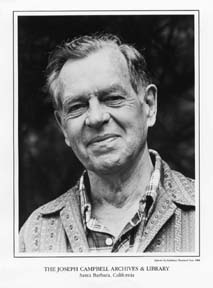
Joseph Campbell makes an important point in an interview with Bill Moyers:
One of our problems today is that we are not well acquainted with the literature of the spirit. We're interested in the news of the day and the problems of the hour. It used to be that the university campus was a kind of hermetically sealed-off area where the news of the day did not impinge upon your attention to the inner life and to the magnificent human heritage we have in our A great tradition--Plato, Confucius, the Buddha, Goethe, and others who speak of the eternal values that have to do with the centering of our lives. When you get to be older, and the concerns of the day have all been attended to, and you turn to the inner life--well, if you don't know where it is or what it is, you'll be sorry.

Greek and Latin and biblical literature used to be part of everyone's education. Now, when these were dropped, a whole tradition of Occidental mythological information was lost. It used to be that these stories were in the minds of people. When the story is in your mind, then you see its relevance to something happening in your own life. It gives you perspective on what's happening to you. With the loss of that, we've really lost something because we don't have a comparable literature to take its place. These bits of information from ancient times, which have to do with the themes that have supported human life, built civilizations, and informed religions over the millennia, have to do with deep inner problems, inner mysteries, inner thresholds of passage, and if you don't know what the guide-signs are along the way, you have to work it out yourself. But once this subject catches you, there is such a feeling, from one or another of these traditions, of information of a deep, rich, life-vivifying sort that you don't want to give it up.
I count myself as very lucky indeed to have received a liberal education. Even so, it's important for me to keep reading, to keep learning, to keep being open to the stories of other cultures. All of us can benefit from making such a commitment to ourselves.

Friday, October 20, 2006

Friday cat blogging!

Sandy's cat
Photo by Cynthia Burgess

The benefits of discipline

Bill Miller sent me the following poem today. I think you can see the connection with meditative practice:

Samurai Song

When I had no roof I made
Audacity my roof. When I had
No supper my eyes dined.

When I had no eyes I listened.
When I had no ears I thought.
When I had no thought I waited.

When I had no father I made
Care my father. When I had
No mother I embraced order.
When I had no friend I made
Quiet my friend. When I had no
Enemy I opposed my body.

When I had no temple I made
My voice my temple. I have
No priest, my tongue is my choir.

When I have no means fortune
Is my means. When I have
Nothing, death will be my fortune.

Need is my tactic, detachment
Is my strategy. When I had
No lover I courted my sleep.

-- Robert Pinsky

Thursday, October 19, 2006

Letting go of rigidity


My word, this woman is sensible! I want to share with you another excerpt from Living Meditation, Living Insight by Dr. Thynn Thynn. This whole book is written in question/answer form and Dr. Thynn's answer to the following question gives me enormous respect for her:
Q: I have tried being mindful of the moment. But it is strenuous and I get all tangled up.

A: For goodness sakes, staying with the moment is only a figure of speech. It is not a commandment to be followed rigidly. This is not a proficiency test. You must understand this from the outset; otherwise you will be tied up in knots trying too hard every second of the day.

If you become too involved with staying in the moment, you lose the art of living -- of free flowing.

You must realize that staying with the moment is just a means to break the mind's old habits. Usually the mind flitters between thoughts and feelings about the past, present and future. Staying with the moment is just a way to train the mind to cease flitting.

It is not important that you be with the moment every single moment of the day. What is important is that you learn to get out of the constant mental run-around and to be more focused and grounded.

Once you break the habit of the roaming mind, you will find you are more centered and more with the present moment.
Sometimes people are more concerned with "getting it right" than they are with accepting what is. When we accept what is, we accept that we're not going to get it right all the time. This is just common sense! So let go of perfectionism and don't get rigid or legalistic about any of the instructions about working with the mind. Remember, it's the spirit, not the letter, of the law that gives life.

Wednesday, October 18, 2006

Wednesday life form blogging

Smokey the Wonder Dog
Photo by Bill Miller

Design your own seal


Well, this is fun. I found a site that can generate seals like the one above. You can choose your own central symbol as well as the text font, the colors and the border. You can then put them on your site or email them to friends or order stickers in the same design. Check it out!

Apache blessing

May the sun bring you new energy by day,
may the moon softly restore you by night,
may the rain wash away your worries,
may the breeze blow new strength into your being.

Tuesday, October 17, 2006

Acquiring peace of mind

It's really not enough to set aside a specific time for daily meditation if we're then going to forget about meditative principles for the rest of our day. Dr. Thynn Thynn speaks to this in her book Living Meditation, Living Insight:
[I]f meditation is to help you acquire peace of mind as you function in your life, then it must be a dynamic activity, part and parcel of your daily experience. Meditation is here and now, moment-to-moment, amid the ups and downs of life, amid conflicts, disappointments and heartaches -- amid success and stress. If you want to understand and resolve anger, desires, attachments and all the myriad emotions and conflicts, need you go somewhere else to find the solution? If your house was on fire, you wouldn't go somewhere else to put out the fire, would you?

If you really want to understand your mind, you must watch it while it is angry, while it desires, while it is in conflict. You must pay attention to the mind as the one-thousand-and-one thoughts and emotions rise and fall. The moment you pay attention to your emotions, you will find that they lose their strength and eventually die out. However, when you are inattentive, you find that these emotions go on and on.
As one of my own meditation teachers used to say, "It's all material!" It really is.

Monday, October 16, 2006

Monday meditative picture blogging

Photo by Susan Miller

This photo was taken in the Russian Orthodox Bishop's house in Sitka, which was the capital of Russian Alaska. The house has been restored and services are held there weekly. Bill and Susan Miller visited Sitka while on a cruise earlier this year.

Observer consciousness and feelings

Feelings and emotions are the occasion for suffering only when we lose mindfulness about them. It's amazing how simply observing a feeling can keep it from taking us hostage. This principle is discussed by Nyanaponika Mahathera in an articla called "Contemplation of Feelings":
Mindfulness should be maintained throughout the short duration of a specific feeling, down to its cessation. If the vanishing point of feelings is repeatedly seen with increasing clarity, it will become much easier to forestall the emotions, thoughts and volitions which normally follow them so rapidly and so often become habitually associated with them. Pleasant feeling is habitually linked with enjoyment and desire; unpleasant feeling with aversion; neutral feeling with boredom and confusion, and also serving as a background for wrong views. But when bare attention is directed towards the arising and vanishing of feelings, these polluting additives will be held at bay. If they do arise, they will be immediately recognized as soon as they appear, and that recognition may often be sufficient to stop them from growing stronger by unopposed continuance.

If feelings are seen blowing up and bursting like bubbles, their linkage with craving and aversion will be weakened more and more until it is finally broken. As attachments to likes and dislikes are reduced by this practice, an inner space will open up for the growth of the finer emotions and virtues: for loving-kindness and compassion, for contentment, patience and forbearance.
The image of feelings expanding and then bursting like bubbles is a reminder of their impermanence. Remembering impermanence will help us practice distress tolerance when we experience painful feelings and then wait patiently for them to dissolve.

Sunday, October 15, 2006

Sunday prayer blogging


Bahai' Prayer for Peace:
Be generous in prosperity, and thankful in adversity. Be fair in your judgement, and guarded in your speech. Be a lamp unto those who walk in darkness, and a home to the stranger. Be eyes to the blind, and a guiding light unto the feet of the erring. Be a breath of life to the body of humankind, a dew to the soil of the human heart, and a fruit upon the tree of humility.

Saturday, October 14, 2006

Seeing your mental process

Here's a little discussion about the impermance of thoughts and how not to give feelings unnecessary energy. It's by Dr. Thynn Thynn from her book, Living Meditation, Living Insight.
Thoughts and emotions by themselves are just momentary and possess no life of their own. By clinging to them, you prolong their stay.

Only when your mind is free from clinging and rejecting can it see anger as anger, desire as desire. As soon as you "see," your mental process is fully preoccupied with "seeing," and in that split second anger dies a natural death... This awareness brings new insight into life, new clarity and new spontaneity in action.

So, you see, meditation need not be separate from life and its daily ups and downs. If you are to experience peace in this everyday world, you need to watch, understand and deal with your anger, desire and ignorance as they occur. Only when you cease to be involved with your emotions can the peaceful nature of your mind emerge. This peace-nature enables you to live every moment of your life completely. With this newfound understanding and awareness, you can live as a complete individual with greater sensitivity. You will come to view life with new and fresh perceptions. Strangely enough, what you saw as problems before are problems no more.
I am impressed with the point that the emotions are momentary and have no life of their own. In other words, they derive life from the energy we give them. We actually can choose to withhold energy from difficult feelings and then they will dissolve on their own. It may take a while but if we let go of our attachment to instant gratification we will be able to wait without undue distress.

Friday, October 13, 2006

Friday cat blogging!

Leroy
Photo by Ellie Finlay

The remedy for ill will

I often encounter resistance to the idea of wishing our enemies well. People will often justify the wish for their enemies to suffer. H. Gunaratana speaks to this in his book Mindfulness in Plain English:
For all practical purposes, if all of your enemies are well, happy and peaceful, they would not be your enemies. If they are free from problems, pain, suffering, affliction, neurosis, psychosis, paranoia, fear, tension, anxiety, etc., they would not be your enemies. Your practical solution to your enemies is to help them to overcome their problems, so you can live in peace and happiness. In fact, if you can, you should fill the minds of all your enemies with loving-kindness and make all of them realize the true meaning of peace, so you can live in peace and happiness. The more they are in neurosis, psychosis, fear, tension, anxiety, etc., the more trouble, pain and suffering they can bring to the world. If you could convert a vicious and wicked person into a holy and saintly individual, you would perform a miracle. Let us cultivate adequate wisdom and loving- kindness within ourselves to convert evil minds to saintly minds.
So it is actually to everybody's benefit if our enemies are happy, peaceful and full of well-being. Remember, we want them to be truly happy - that is, full of compassion for self and others. If they are full of compassion, they will stop harming others. And, of course, wishing our enemies well is the remedy for the resentment that infects us. We will be happier and more peaceful if the resentment is dissolved.

Thursday, October 12, 2006

Seeeing ourselves without illusion

It is not uncommon for people to believe that if they make certain changes in themselves that they can then accept themselves. It actually works the other way around: If we accept ourselves as we are, then we are able to make changes. But we can't accept ourselves as we are until we know ourselves as we are. This principle is addressed by H. Gunaratana in his book Mindfulness In Plain English:
You can't make radical changes in the pattern of your life until you begin to see yourself exactly as you are now. As soon as you do that, changes flow naturally. You don't have to force or struggle or obey rules dictated to you by some authority. You just change. It is automatic. But arriving at the initial insight is quite a task. You've got to see who you are and how you are, without illusion, judgement or resistance of any kind. You've got to see your own place in society and your function as a social being. You've got to see your duties and obligations to your fellow human beings, and above all, your responsibility to yourself as an individual living with other individuals. And you've got to see all of that clearly and as a unit, a single gestalt of interrelationship. It sounds complex, but it often occurs in a single instant. Mental culture through meditation is without rival in helping you achieve this sort of understanding and serene happiness.
...
Meditation is intended to purify the mind. It cleanses the thought process of what can be called psychic irritants, things like greed, hatred and jealousy, things that keep you snarled up in emotional bondage. It brings the mind to a state of tranquility and awareness, a state of concentration and insight.
When people come to talk to me about making wanted changes in their lives, I encounter a lot of resistance to the idea that they need to see who they are without judgment. But that really is the way forward. Our judgments distort what we see and keep us stuck. When we accept without judgment we no longer have to expend a huge amount of energy not seeing who we are because it hurts so much to see. And that energy then can be used for making the changes we really want to make.

Wednesday, October 11, 2006

Wednesday life form blogging

Maximus the colt

Marsha Gulick sent me this picture of two of her Gypsy Cob horses. You can see more on her website, Gypsy Dreams.

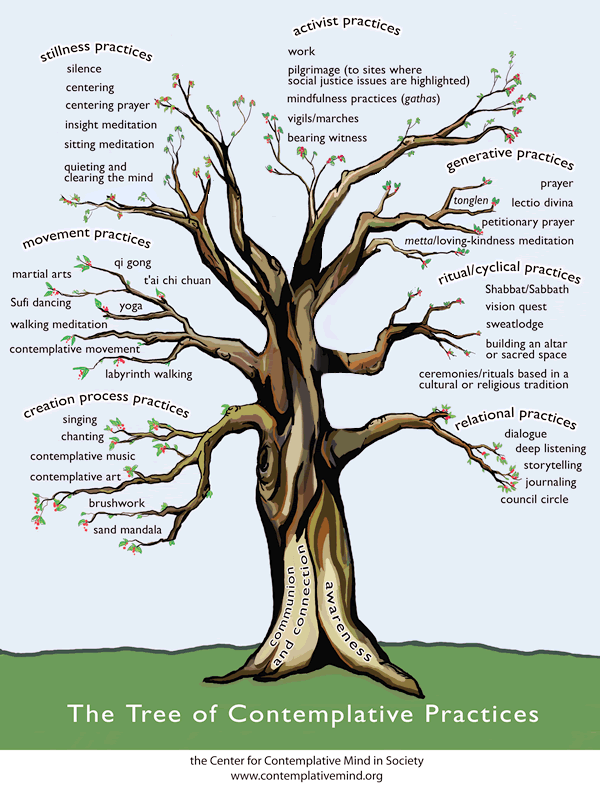
Contemplation tree


The above Tree of Contemplative Practices is one I found on the Contemplative Mind in Society website that Elizabeth Thompson told me about and is used with permission. You can click through and see a larger, easy to read version.

Here's some advice on centering practice from the site:
Common Centering Methods:

* Count numbers, such as counting down from 10 to dissipate anger
* Repeat a word or phrase, such as a prayer or affirmation
* Smile and relaxing your body
* Go for a walk; get out into a different environment
* Stretch
* Close your eyes and breathe deeply
* Concentrate on breathing, such as breathing out for a count of 8 and in for a count of 4
* Count your breaths
* Doodle or write
* Carry or place near yourself a visual reminder to stay centered, such as a quote or image
* Use sound to bring yourself back to your center. Periodically ring a bell, chime, or other gentle reminder.

Persistence is an important aspect of centering practice. Purposefully centering yourself many times throughout the day, even when you are not feeling particularly emotional or in need of centering, will help to deepen your practice.

I agree with the concluding paragraph above about persistence. The regular practice of centering enables us to do it in "emergency" situations. But don't wait for the emergency to learn how!

My favorite centering method, when it's possible to do it, is to go outside and take off my shoes and stand barefoot on the ground so that I have the sense of connecting with the earth. This is particularly effective whenever I'm agitated or frazzled. I just send all that excess energy through my feet and into the earth where it is absorbed and neutralized. Even if it's impossible to go outside for this, I can do it my office and send the agitation through the floor and into the earth. It's a very centering and soothing practice.

Tuesday, October 10, 2006

Belonging

When I lived in South Africa I learned a principle that is very powerful and is actually antithetical to the belief in "rugged individualism" so prized in the U.S. That principle is ubuntu - an untranslatable word that has to do with connectedness being fundamental to our humanity. Here's what Desmond Tutu has to say about it:
Ubuntu is very difficult to render into a Western language. it speaks of the very essence of being human. When we want to give high praise to someone we say, “Hey, so-and-so has ubuntu.” Then you are generous, you are hospitable, you are friendly and caring and compassionate. You share what you have. It is to say, “My humanity is caught up, is inextricably bound up, in yours.” We belong in a bundle of life. We say, “A person is a person through other persons.” It is not “I think therefore I am.” It says rather: “I am human because I belong. I participate, I share.” A person with ubuntu is open and available to others, affirming of others, does not feel threatened that others are able and good, for he or she has a proper self-assurance that comes from knowing that he or she belongs in a greater whole and is diminished when others are humiliated or diminished, when others are tortured or oppressed, or treated as if they were less than who they are.
The meditative tradition teaches us to cultivate compassion and lovingkindness. Both support a commitment to ubuntu and flow from it.

Monday, October 09, 2006

Monday meditative picture blogging

Photo by Cynthia Burgess

An investment in celebration

Izzy
Photo by Ellie Finlay

This is from Alan Cohen's article, "Everything I Need to Know about Meditation I Learned from my Jewish Mother":
One of the reasons we love to be around children, pets, and spirited elders is that they are delightfully free of tyrannical intellect. They are not at the mercy of belief systems that tell us we should be other than they are. They are not trying to think their way through life; they are having too much fun to have to figure it out. That’s why Ben Williams noted, "There is no psychiatrist in the world like a puppy licking your face." Imagine that life is a big puppy trying to lick your face; the only reason you don’t enjoy it more is that your mind is elsewhere. To get your mind realigned, invite it to think in harmony with Spirit, which is always affirmative and has a greater investment in celebration than complaint.
I want to recommend a website I visit everyday. It's called The Daily Puppy and it features a different puppy every day - usually with more than one picture. I get an enormous sense of refreshment and delight from each posting. No matter what horrible news has been reported that day, I know that I can (in a cyber sort of way!) let a puppy "lick my face" and remind me that life is beautiful.

Sunday, October 08, 2006

Today's prayer


May I be happy, well and peaceful.
May my parents, grandparents and ancestors be happy, well and peaceful.
May my brothers and sisters, my spouse and children, my grandchildren
and all future generations be happy, well and peaceful.
May all my friends and all my enemies be happy.
May all human beings sharing the earth be happy.
May all forms of life, plants, animals, birds, fish and insects be happy.
May all sentient beings in the universe be happy.
May we all be free from suffering and pain.
May we all be free from attachment of greed, anger and ignorance.
May we all attain perfect peace and happiness of Enlightenment through
Buddha's Wisdom and Compassion.

-- Loving-kindness meditation, Reverend T. Kenjitsu Nakagaki
(photo by Cynthia Burgess)

Saturday, October 07, 2006

A splendid torch


Life is no brief candle to me. It is a sort of splendid torch which I have got hold of for the moment, and I want to make it burn as brightly as possible before handing it on to future generations.

-- George Bernard Shaw

Friday, October 06, 2006

Friday cat blogging!

Ethel
Photo by Ellie Finlay

Silence and listening

In the silence of listening, you can know yourself in everyone, the unseen singing softly to itself and to you.

-- Rachel Naomi Remen

For a racing mind

I was cleaning out my inbox and came across something Cynthia sent me. I have no idea where it's from but it lookes interesting to me. (UPDATE: Turns out she told me in a separate email. The link is here.)
Here are some good techniques to use if your mind races:

Relax your body completely.
Take in 4 deep breaths, repeating “4” to yourself as you exhale.
Then take 3 deep breaths, repeating “3 when you exhale.
Now take 2 deep breaths, repeating “2” when you exhale.
Finally, take 1 deep breath, repeating “1” as you exhale.

At the same time, focus your mind on a pleasant image. Imagine that you are a passive observer of something very relaxing where there is repetitive motion.

Example: relaxing on the beach, watching the waves go back and forth or just lying in the grass and watching as the clouds move by overhead.

Finally, now you want to cause your mind to go completely blank. As you are focusing on this repetitive movement, begin to envision a blank form. Just like you are standing on the edge of an abyss where there is no form and all is void.

Focus on the void and remain there as you continue to relax deeper and deeper. Hold this as long as you can.
My only disagreement with this is that we can't really make out minds go completely blank. We can, however, focus on something blank and give our minds permission to rest there. I think that's what the writer means.

The breathing exercise is excellent. Try it. I think you'll see that it works in situations of anxiety or agitation.

Thursday, October 05, 2006

Still more on compassion

In his book, Who Speaks for God?: An Alternative To the Religious Right—A New Politics of Compassion, Community, and Civility, Jim Wallis has this to say about compassion:
Compassion has less to do with 'doing charity' than 'making connections.' The word compassion means literally 'to suffer with.' It means to put yourself in somebody else's shoes, try to understand their experience, or see the world through their eyes. That always changes our perspective. True compassion has less to do with sympathy than it does with empathy.

The call to compassion is not about somebody 'doing for' somebody else. Rather, its value is in the connection, the relationship, and the transaction in which everyone is changed. The Hebrew prophets say that we find our own good in seeking the common good. The prophet Isaiah says that when we feed the hungry, take in the homeless, and 'break the yoke' of oppression, then we find our own healing. He also says the act of compassion requires that you 'not hide yourself from your own flesh.' In other words, compassion means to recognize the kindred spirit we all share together. And the Bible insists that the best test of a nation's righteousness is how it treats the poorest and most vulnerable in its midst.
Once again, meditation helps us cultivate compassion because it teaches us reliable skills for managing our thoughts and emotions so that we're not overwhelmed. I really think the fear of being overwhelmed is what prevents a lot of people from opening their hearts.

Wednesday, October 04, 2006

Wednesday life form blogging

Photo by Cynthia Burgess

Compassion and the news

Here's a good reason for keeping up with what's going on. It's from Heal Thy Self: Lessons on Mindfulness in Medicine by Saki Santorelli:
Twenty years ago I met a man from Montana who watched the news on television and read the newspapers because he said that doing so awakened his heart of compassion. Although not particularly interested in the news itself, he found these two forms of media rich sources for cultivating his growing sense of care for and connection to people, animals, landmasses, oceans, forests, and countries all over the planet. He went on to say that he would sit down in his living room, watch or read about some atrocity occurring in some part of the world, and feel his pain, his impulse to turn away, and, in turn, his sense of connection with all of these beings.
Meditation helps us keep our heart open when our impulse is to turn away and tune things out. This is because through the meditative process we learn how to train our minds not to be overwhelmed. And it's the fear of being overwhelmed that causes us to to turn away in the first place.

Tuesday, October 03, 2006

Still more on attention

I found myself pondering the practice of attention again today and looking for some more material about it. I found this passage by artist and spiritual writer William Segal:
With sustained attention, one grasps relationships which usually are overlooked. So how to nurture an attention which penetrates into the heart of things? It's an interesting subject, to speculate that with attention. Whole new worlds reveal themselves. The Chinese and Japanese artists have understood for a long time the importance of being 'still,' of gathering their energies for a few moments before beginning.

Instead of a headlong rush, which is fine for a while, one has to step back. This stepping back is difficult, especially when one is on a roll. In painting, as in other pursuits, when all is going well one wants to keep going... That's fine, but sometimes a pause, stop, stepping back and looking brings the unexpected.
...
Concentration, attention is the key in any endeavor, whether building a brick wall, working with a computer program or painting a picture.
Can you stop rushing, be still and just pay attention? The meditation process trains us to do just that and reinforces our inner faith in its value.

Monday, October 02, 2006

Monday meditative picture blogging

Photo by Cynthia Burgess

Today's prayer

I found this today and I think it is quite beautiful:

Today my prayer consisted in simply going to my heart and re-membering all the folks I've stored there. It is not cold storage. It is a quite warm and tender place.
-- Sr. Macrina Wiederkehr, OSB
Tree Full of Angels

Sunday, October 01, 2006

Transformation

Two quotes about transformation that help bolster aspiration:

The great metaphors from all spiritual traditions — grace, liberation, being born again, awakening from illusion — testify that it is possible to transcend the conditioning of my past and do a new thing.

Sam Keen

Ideally, we would rise to the occasion and transform the adversity into an opportunity for greater happeniness. We would use the adversity to deepen our own wisdom and compassion, and transform it into something we can embrace. We would chew it up, swallow, and digest it, and be closer to enlightenment as a result. That's the ideal, as the Tibetans say: transform adversity into spiritual growth.

B. Alan Wallace

Basically what these two passages say to me is that it's not necessary to stay stuck. Transformation is, indeed, possible. Believing that is, without a doubt, the first step.

Saturday, September 30, 2006

Saturday dog blogging

Today is the garage sale for the Center (great fun!) and this morning someone there asked me about my dog. She said she'd only recently started reading the blog and had only seen cats. Where was my dog? So here's a repeat. It's a great one of Izzy's old face:

Photobucket - Video and Image Hosting

Photo by Ellie Finlay

I sometimes blog dogs on Wednesdays; that's "lifeform blogging" day. Would those of you who have dogs please send in pictures? I'll gladly post them. We don't want cats having too much of an edge, now do we?

Ecstasy

Here's an attitude I recommend:

I find ecstasy in living -- the mere sense of living is joy enough.

-- Emily Dickinson

Friday, September 29, 2006

Friday cat blogging!

Sandy's cat
Photo by Cynthia Burgess

Self compassion

We've been talking about doing shadow work the last few days. It's a very important practice and ends up being truly liberating. But it's almost impossible to do shadow work without compassion for ourselves. Here's a comment on self compassion by Pema Chödrön that I just found:
As we learn to have compassion for ourselves, the circle of compassion for others -- what and whom we can work with, and how -- becomes wider.
When I ease up on myself, I ease up on other people. It's as simple as that!

Thursday, September 28, 2006

More on embracing the shadow

The higher the sun rises, the less shadow it casts.

Lao Tzu

Here are a couple of exercises that can help us bring aspects of our shadow into consciousness so that we can exercise skillful choices with regard to these traits:
Make a list of people you cannot stand. Identify the qualities in them that you dislike the most. Now recognize that those same qualities are part of your character make-up. Work with these shadow qualities. Have them tell you their stories, why they have shown up in your life and what they would like you to do about them.

Identify your golden shadows, those unused talents and gifts which for some reason you are more comfortable admiring in others than claiming in yourself. Who have you projected yours onto? Call these aspects of yourself home and have a dialogue with them in your journal.
Maybe there's nobody in your personal life whom you "can't stand". But take a look at public figures. Does anyone on the world stage qualify? Probably so! Also look at those whom you admire in public life. Both observations can help us gain insight into our own inner make-up.

Wednesday, September 27, 2006